How to Clean a Granite Headstone
Caring for your granite memorial. Simple steps to keep it looking its best.
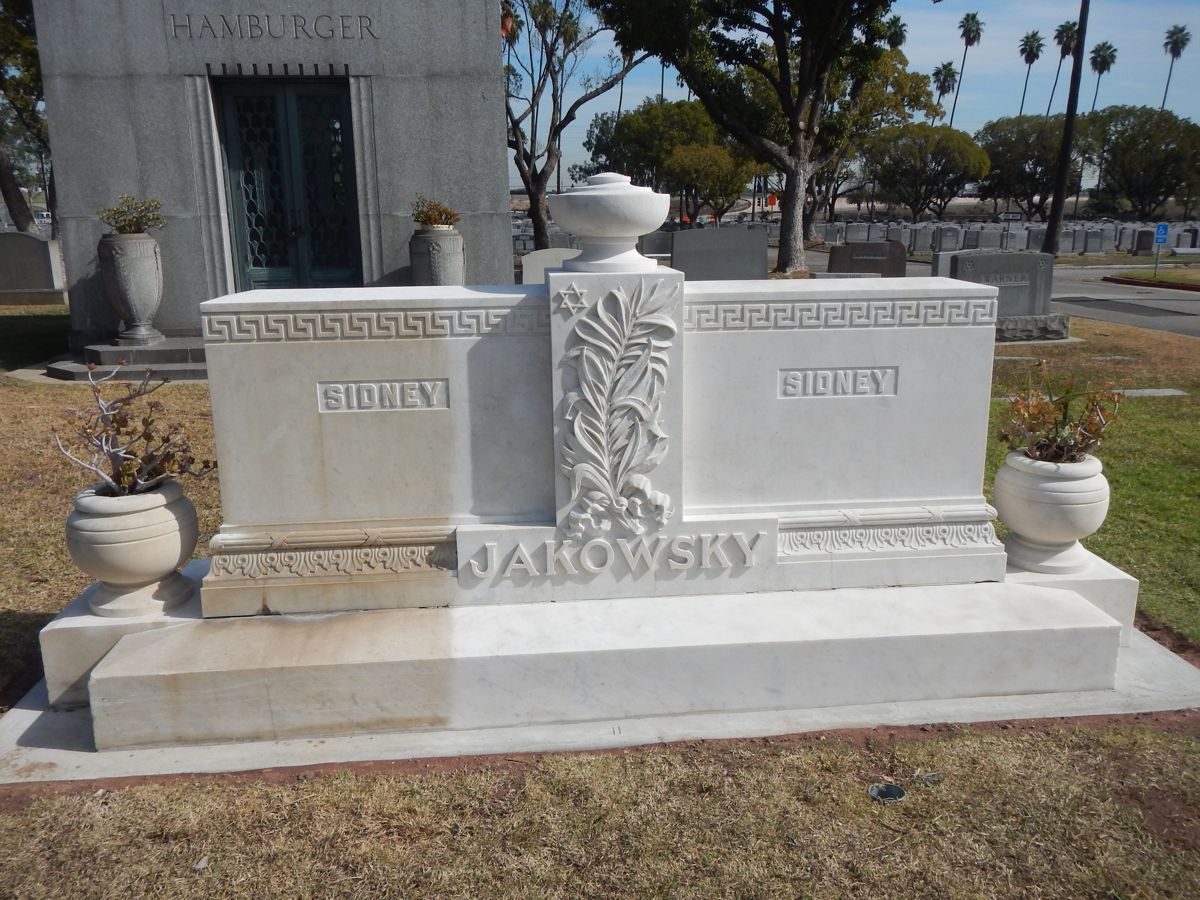
Why Granite Headstones Get Cloudy White Spots
Granite holds up well to weather and time, and a quality memorial is made to last for many years. A little care now and then keeps it looking the way it did the day it was set.
Cemetery sprinklers and ordinary tap water carry dissolved minerals, mostly calcium and magnesium. When the water dries in the sun, those minerals are left behind on the surface. Over time they build into a chalky white film, often called hard water deposits or limescale.
These deposits sit on top of the granite. They don’t harm the stone itself, and with the right approach they come off cleanly.
How to Clean a Granite Headstone, Step by Step
Once or twice a year is plenty for most markers.
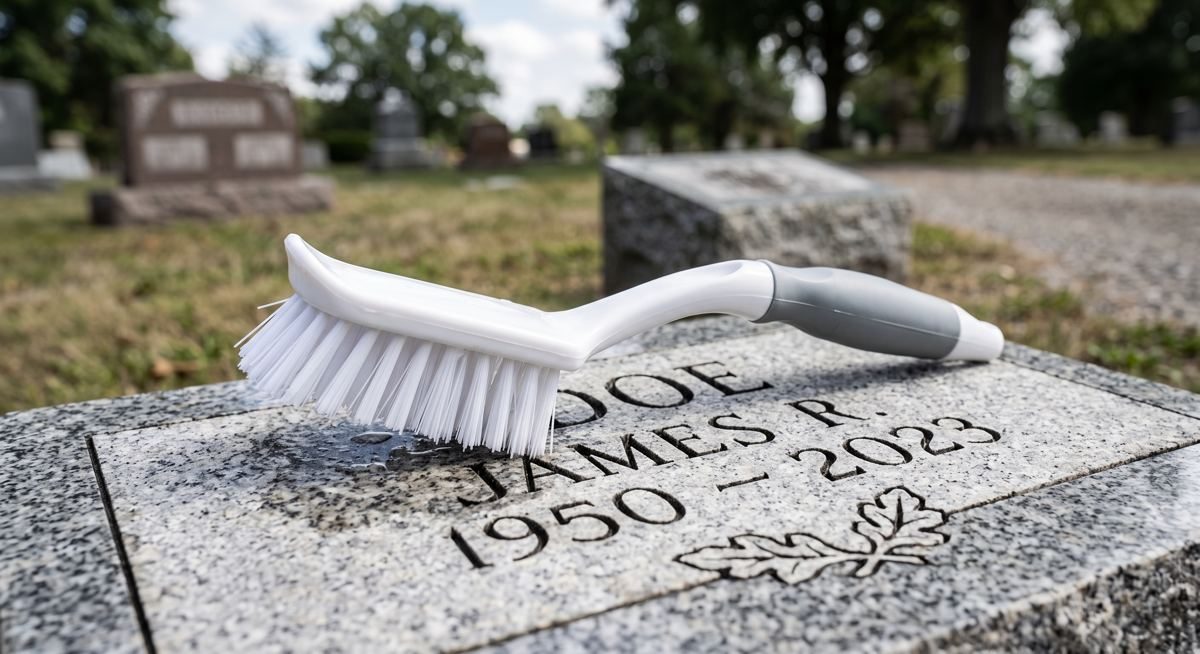
Fill a Bucket
Fill a bucket with water and add two drops of Dawn dish soap. Pour it over the stone, or work it into the white scrub brush.
Scrub
Scrub the stone with the brush, working into the engraving and the lettering as well as the flat, polished surface.
Rinse
Rinse with clean water.
Grill Brick
While the stone is still wet, go over the polished areas with a grill brick in a rubbing motion. Keep it off the engraving, especially any painted lettering, so the paint doesn’t come out with it.
Rinse Again
Rinse once more with clean water.
No need to dry it by hand. It dries in the sun, and most markers get wet daily anyway from the cemetery’s own sprinklers.
Removing Hard Water Stains from a Granite Headstone
The grill brick is what actually gets rid of hard water buildup, and it works while the stone is still wet from rinsing. Go over the polished surface in a rubbing motion. It won’t hurt the polish and it won’t damage the stone, it just scrapes that water scum right off.
The one place to stay away from is the engraving itself, especially if the lettering is painted. Press a grill brick into a painted letter and the paint can come out with it.
A grill brick is compressed pumice, not a bathroom pumice stone. It’s sold on Amazon, and it’s the same product we point families to below.
Best Granite Headstone Cleaners You Can Buy
If you’d rather use a ready made cleaner, look for one labeled safe for natural stone and acid free. These are the four we point families to, including the scrub brush and grill brick from the steps above.
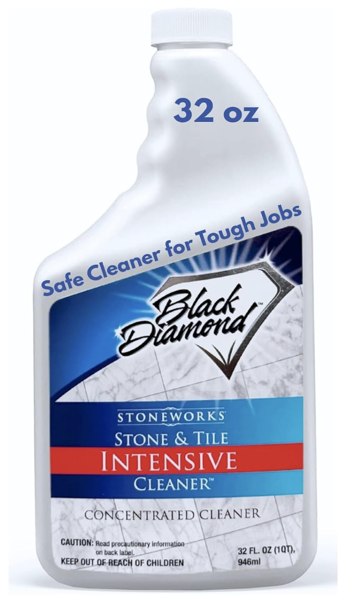
Black Diamond Stoneworks
Stone & Tile Intensive Cleaner
An acid free, biodegradable concentrate made for marble, granite, and other natural stone. Lifts hard water film and everyday grime without harsh chemicals.
View on Amazon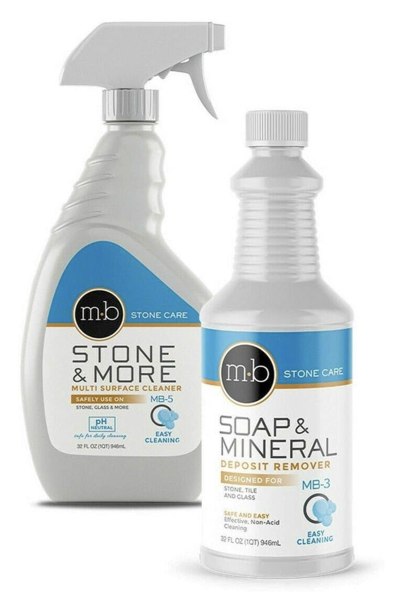
MB Stone Care
Soap & Mineral Kit
A two piece, non acid kit from a professional stone care brand: the MB-5 spray for everyday cleaning, plus the MB-3 remover for tougher soap and mineral deposit buildup.
View on Amazon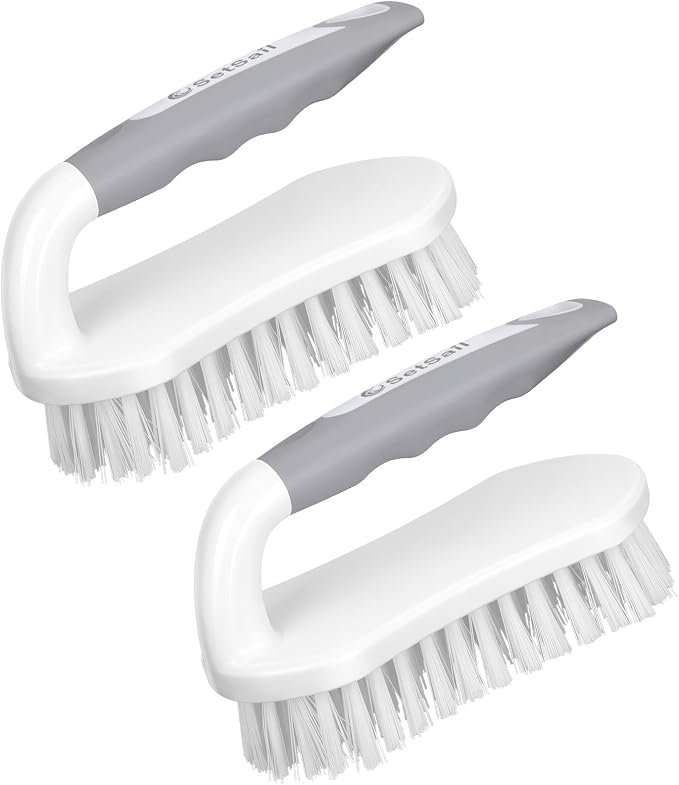
SetSail
Heavy-Duty Scrub Brush
Stiff bristles built for real scrubbing, used with water and a little Dawn dish soap, including the engraving and lettering.
View on Amazon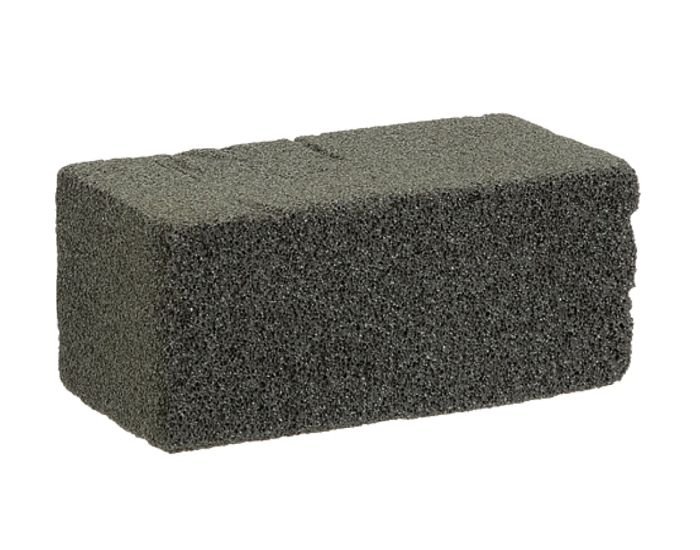
Grillmaster
Grill Brick
Compressed pumice, not a bathroom pumice stone. Scrapes hard water buildup off polished granite without harming the surface. Keep it off the engraving.
View on AmazonWe don’t sell these products ourselves and aren’t compensated for these links. We’re simply sharing what’s worked well for families.
Safe and Unsafe Ways to Clean a Headstone
Granite is tough, but its polished surface needs care.
Safe to Use
Please Keep Away
Acidic cleaners can seem to cut through mineral spots, but with repeated use they wear down the protective seal and leave a dull haze on the polish that only a professional can restore. Granite is forgiving, so go easy on it.
Frequently Asked Questions
How often should you clean a granite headstone?
Once or twice a year is plenty for most markers. If a stone sits close to a sprinkler head it may need a rinse more often. A light chalky film is the cue that it’s time.
Is it safe to use vinegar to clean a headstone?
No. It looks like it’s working at first, vinegar and other acids cut right through the mineral spots, but the payoff comes later. Repeated use wears down granite’s polish and leaves a dull haze that only a professional can restore. Keep it in the kitchen.
Can I pressure wash a headstone?
We don’t recommend it. A pressure washer can chip an edge or force water into a seam around an inset vase or bronze plate. Soap, a soft cloth, and a garden hose get the same result without the risk.
What is the white film on a granite headstone?
Hard water. Cemetery sprinklers and ordinary tap water carry calcium and magnesium, and both get left behind once the water dries in the sun. The deposits sit on top of the stone, not in it, so they come off cleanly with the right method.
Does cleaning a headstone damage the engraving?
Not if you stay with soap, water, and a soft brush, or a grill brick for hard water buildup. Just keep the grill brick off the engraving itself, especially painted lettering, where it can lift the paint along with the buildup. Wire brushes and metal scrapers are the real risk to the polished face, keep those off the stone entirely.
Who do I call to have a headstone professionally cleaned in Southern California?
VJ Memorials, since 1966. Call our Chino factory if deposits won’t lift, the polish looks dull, or the lettering could use attention, and we’ll take a look.
When to Call a Professional for Headstone Cleaning
Some jobs are better left to us, and we’re glad to help. Call us if you see:
• Deposits or staining that won’t lift after a gentle cleaning
• A dull or hazy look on the polished surface
• Lettering or engraving you’d like refreshed
• Chips, settling, or other repairs the marker may need
We offer professional cleaning on headstones and monuments of all sizes.
Questions About Your Memorial?
VJ Memorials has served Southern California families since 1966. We’re always a phone call away.
Come See Us in Person
Walk through our Chino factory, see full size granite samples, and talk to someone who knows these stones inside and out. No appointment needed.
Come Visit UsTake This Guide With You
A complete printable guide to cleaning a headstone yourself.
Download the PDF